
Frying pan stickiness can make or break your day. Let’s explore how sticky are the pans most people choose.
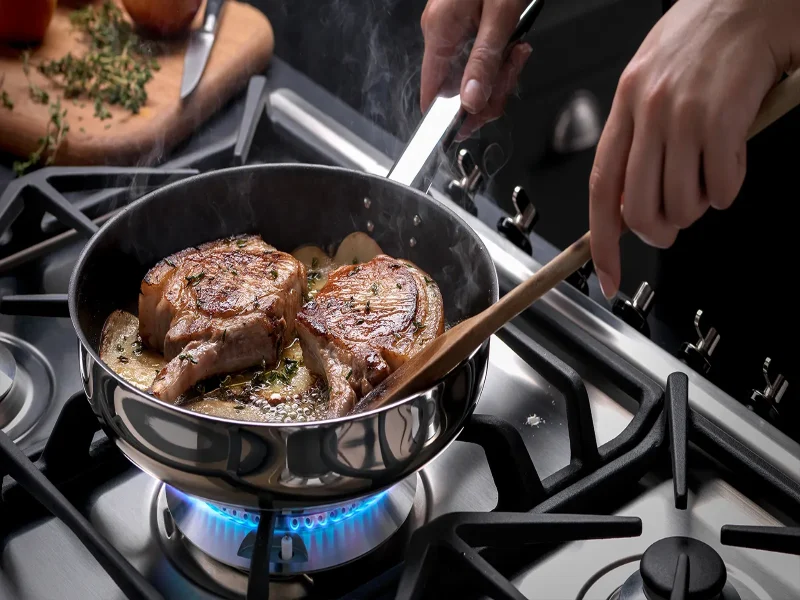
Understanding Non-Stick Performance
When you’re flipping a delicate fish fillet or sliding a perfect omelet onto a plate, the last thing you want is food cemented to your pan. The right non-stick surface transforms cooking from a frustrating chore into an enjoyable experience, but with so many options available, how do you know which pan will actually deliver on its promises?
Popular Non-Stick Pan Types and How They Perform
Traditional PTFE (Teflon) Coated Pans
These are the classic non-stick pans most people recognize. Modern PTFE coatings have come a long way since the original Teflon, offering excellent release properties right out of the box. Eggs slide around like they’re on ice, and cleanup typically requires nothing more than a quick wipe with a sponge.
The reality: These pans excel at being genuinely non-stick when new, but their performance depends heavily on proper care. High heat, metal utensils, and abrasive cleaning can degrade the coating over time. Most quality PTFE pans remain impressively non-stick for 2-5 years with gentle use, though budget options may show wear within months.
Ceramic Non-Stick Pans
Ceramic coatings have gained popularity as a PTFE alternative, marketed as a more natural option. They provide a smooth, slick surface that works beautifully when brand new, often matching traditional non-stick performance in the first few months.
The reality: Ceramic pans tend to lose their non-stick properties faster than PTFE options. Many users report that after 6-12 months, food begins sticking more noticeably, especially if the pan has been exposed to high heat or oils have built up microscopic layers on the surface. They require careful temperature control and often benefit from a light coating of oil even after they’re broken in.
Stainless Steel Pans
Wait, aren’t these supposed to stick? Yes and no. Stainless steel isn’t naturally non-stick, but experienced cooks achieve excellent release by mastering technique: preheating properly, using adequate fat, and knowing when food is ready to release naturally.
The reality: Stainless steel has a learning curve. Food will stick if you don’t use the right technique, but once you understand how to work with these pans, they offer incredible versatility and will never lose their “non-stick” capability because it’s all about method rather than coating. For many home cooks, though, this represents more hassle than they want to deal with on a busy weeknight.
Carbon Steel and Cast Iron
When properly seasoned, these develop a natural non-stick patina that improves with use. They’re particularly beloved for high-heat cooking and can last generations.
The reality: These pans require commitment. The seasoning needs to be built up over time and maintained, which means avoiding certain acidic foods and following specific cleaning protocols. When well-seasoned, they’re genuinely non-stick for many tasks, but they’ll never match the effortless release of a good PTFE pan for delicate items like eggs. They’re also heavy, which matters when you’re cooking daily.
What Actually Makes Pans Stick?
Understanding why pans stick helps you choose better and maintain them properly. Food sticks when:
- Temperature is wrong: Too cold, and food bonds to the surface. Too hot with certain coatings, and you damage the non-stick properties.
- The coating is damaged: Scratches, chips, and worn areas create rough spots where food catches.
- Protein bonding occurs: Proteins in meat and eggs temporarily bond to metal surfaces until they’ve cooked enough to release naturally.
- Buildup accumulates: Burnt-on residue or polymerized oils create sticky spots even on non-stick surfaces.
Making Your Choice
The “stickiest” pans that most people choose? Ironically, it’s often the cheap non-stick pans that promise easy cooking but fail quickly. Budget PTFE pans with thin coatings start sticking within months, and low-quality ceramic pans lose their properties even faster, leaving frustrated cooks wondering what went wrong.
For reliable, genuinely non-stick performance, consider:
For ease of use: A quality PTFE-coated pan from a reputable brand offers the most consistent non-stick experience with minimal learning curve. Expect to replace it every few years, but enjoy effortless cooking in the meantime.
For durability: Hard-anodized aluminum with reinforced non-stick coatings strikes a balance between performance and longevity, often lasting 5-7 years with proper care.
For the long haul: If you’re willing to invest time in technique, stainless steel or well-seasoned carbon steel will never need replacement and won’t stick once you master the method.
Care Tips for Any Non-Stick Pan
Regardless of which type you choose, these practices will minimize sticking:
- Use low to medium heat (high heat degrades most non-stick coatings)
- Add a small amount of fat even with non-stick surfaces
- Use wooden, silicone, or nylon utensils to preserve coatings
- Hand wash with soft sponges rather than putting pans in the dishwasher
- Allow pans to cool before washing to prevent thermal shock
- Store carefully to avoid scratching the cooking surface
The Bottom Line
Every pan will stick under the wrong conditions, and no coating lasts forever. The pans most people choose often stick because they’re either low-quality products with poor coatings or high-quality pans that aren’t being used or maintained properly.
Your best bet? Invest in a quality non-stick pan that matches your cooking style and care preferences, learn the basics of proper use for your chosen type, and remember that even the best non-stick pans are eventually consumable items. With realistic expectations and proper care, you can enjoy frustration-free cooking for years.
The perfect pan isn’t the one that never sticks—it’s the one that works with your lifestyle, your cooking habits, and your willingness to maintain it. Choose accordingly, and your morning eggs will thank you.